Over the past week or so we've watched few movie clips about the Vietnam war. Last week we watched some from Apocalypse Now and today we watched a clip from First Blood, which is the first Rambo movie.
I thought the clips we watched made the movie seem pretty interesting. Even though the movie itself wasn't actually about the Vietnam war and didn't take place in Vietnam, they had some snippets of information regarding things that happened during the war and what it was like for Rambo now that he was back home.
One of the lines in the clip that I found to be funny was when one of the police officers heard that Rambo had been a green beret in the war. The officer said, "Those guys are pretty bad-ass!" (or something along those lines, the actual quote may be a little off). Anyway, I thought that was a good way to show that the soldiers in the war were tough guys, they say and did a lot of things that we would find absolutely grotesque.
Another interesting part of the movie was when the Military person who had trained Rambo for the war came into the tent with the police officers and talked about all the things he had trained Rambo to do. He said that Rambo was trained to live off the land, eat anything to survive, ignore pain, and most importantly, he was trained to kill. This was a good way to portray how the things the soldiers did in the war will be carried with them for life. They can't just throw those memories and nightmares behind them as soon as they get home, they will remember everything they had to do to survive.
Monday, November 2, 2009

Thursday, October 22, 2009
Vietnam Unit
Although I usually am not a history buff or someone who knows a lot about war, I have found this past unit to be surprisingly interesting. I've really enjoyed the things we've read and watched about the Vietnam war, and I am actually learning quite a bit about the war as well.
After reading "Times have changed for student protesters" by Lampert Smith, I got a new perspective on what it must have been like for the protesters we watched yesterday and the day before in "Two Days in October."
The article talked about how college students today want to protest, and they care a little, but they don't care that much. I think that is definitely true. Students today want to participate, but only when it is convenient for them. Heaven forbid they should miss the new episode of "Grey's Anatomy" (to steal Smith's example) or "The Hills," "The Office," etc. These shows can all be viewed at a later date on the Internet, and I'm sure they'll be aired multiple times on TV as well. Most people have the idea that things aren't' going to change, so there is no hurry and no reason to get out and try to change things right now. This idea could be what is hurting us. How can our politicians know what the people are thinking if no one is willing to give up their favorite TV show to speak out for what they believe?
Also, since no one is willing to give up precious TV time to speak out for a cause, they have no right to bitch and moan about how horrible our politicians are and about how horrible it is that we are in Iraq, how horrible it is that taxes are going to be raised, how horrible it is that texting is illegal while driving. If you have a problem with it, do something about it! You can't expect anything to change if you aren't willing to put in the time and effort to do something about it.
After reading "Times have changed for student protesters" by Lampert Smith, I got a new perspective on what it must have been like for the protesters we watched yesterday and the day before in "Two Days in October."
The article talked about how college students today want to protest, and they care a little, but they don't care that much. I think that is definitely true. Students today want to participate, but only when it is convenient for them. Heaven forbid they should miss the new episode of "Grey's Anatomy" (to steal Smith's example) or "The Hills," "The Office," etc. These shows can all be viewed at a later date on the Internet, and I'm sure they'll be aired multiple times on TV as well. Most people have the idea that things aren't' going to change, so there is no hurry and no reason to get out and try to change things right now. This idea could be what is hurting us. How can our politicians know what the people are thinking if no one is willing to give up their favorite TV show to speak out for what they believe?
Also, since no one is willing to give up precious TV time to speak out for a cause, they have no right to bitch and moan about how horrible our politicians are and about how horrible it is that we are in Iraq, how horrible it is that taxes are going to be raised, how horrible it is that texting is illegal while driving. If you have a problem with it, do something about it! You can't expect anything to change if you aren't willing to put in the time and effort to do something about it.
Slightly delayed...
This is my slightly delayed blog post from last week. I wanted to comment on Chelsea's choice essay presentation topic, but I seemed to have forgotten until just now. Oops.
Anyway, for those of you in the other class, Chelsea's article was about the state of Texas, and how their governor is threatening to take themselves out of the United States and become their own country. How exactly would this work? It would be odd to see Texas split up into small states within itself. Not to mention, it screws up our whole "Fifty Nifty United States" song that we sang back in fifth grade.
There's also the fact that I don't think Texas is either large enough or powerful enough to survive on their own. They don't have the resources to keep themselves stocked with everything they need. And it wouldn't be a surprise to me if all of the other states in America started charging them more for anything they buy from the U.S., if they were to separate themselves from us.
An overwhelming number of Texans think it would be a good idea for them to separate from the U.S. What are they basing this idea off of? Do they realize that their resources would be incredibly small? Heaven forbid anyone tried to go to war with them, they would get absolutely demolished. There's no way a single state can turn itself into a country and be successful against a larger force such as Russia, the U.S., or any other large country in the world.
To me, this idea is simply absurd. The people of Texas need to get over themselves and learn how to get along with the rest of the country. Taxes are going to go up no matter what, and splitting off from the U.S. is not going to solve their problems, it is only going to create different ones.
Anyway, for those of you in the other class, Chelsea's article was about the state of Texas, and how their governor is threatening to take themselves out of the United States and become their own country. How exactly would this work? It would be odd to see Texas split up into small states within itself. Not to mention, it screws up our whole "Fifty Nifty United States" song that we sang back in fifth grade.
There's also the fact that I don't think Texas is either large enough or powerful enough to survive on their own. They don't have the resources to keep themselves stocked with everything they need. And it wouldn't be a surprise to me if all of the other states in America started charging them more for anything they buy from the U.S., if they were to separate themselves from us.
An overwhelming number of Texans think it would be a good idea for them to separate from the U.S. What are they basing this idea off of? Do they realize that their resources would be incredibly small? Heaven forbid anyone tried to go to war with them, they would get absolutely demolished. There's no way a single state can turn itself into a country and be successful against a larger force such as Russia, the U.S., or any other large country in the world.
To me, this idea is simply absurd. The people of Texas need to get over themselves and learn how to get along with the rest of the country. Taxes are going to go up no matter what, and splitting off from the U.S. is not going to solve their problems, it is only going to create different ones.
Tuesday, October 13, 2009
Sound & Fury
This is slightly delayed due to my illness last week, and the tennis sub sectional and sectional that caused me to miss 3 days of school. Anyway, I had a few thoughts on the Sound & Fury video we watched during class.
I thought the video was surprisingly good. For being a documentary revolving around the deaf person's decisions whether or not to get an implant, it was actually interesting. It was obvious that the struggles they were facing and the things the people in the video were dealing with were real.
The video made me wonder what I'd do if I were to ever be in that type of situation. That's definitely a tough thing to think about right now, considering it will be a long time before I have children and have to make that type of decision. Nonetheless, it could happen, and this video probably helped prepare me in case it ever does.
The parents in the video made some relevant points, such as how the children who got implants were thrust into the hearing world and no longer wanted anything to do with the deaf world. It took away the connection they had with the deaf world. You could see that with the little girl who didn't even realize she was deaf, because she had had the implant for so long and could hear and speak just like anyone else. I guess that makes sense why Heather's mother and father thought that an implant was a bad idea.
On the other hand, since Heather had already been taught sign language and knew how to effectively connect with the deaf world, it probably would have been ok for her to get an implant. Since she already knows how to speak sign language and her whole family is deaf, her parents wouldn't have to worry about her losing connection with the deaf world or not realizing that she was deaf. She might have some initial problems learning to speak since none of her immediate family can speak, but she could get by with the help of speech therapists and her speaking grandparents or other relatives. I think it would have been a good idea to get Heather the implant that she wanted. It would have given her the opportunity to fit in with both the hearing world and the deaf world, and she could have helped be a translator for her parents and her siblings when dealing with other hearing people.
I thought the video was surprisingly good. For being a documentary revolving around the deaf person's decisions whether or not to get an implant, it was actually interesting. It was obvious that the struggles they were facing and the things the people in the video were dealing with were real.
The video made me wonder what I'd do if I were to ever be in that type of situation. That's definitely a tough thing to think about right now, considering it will be a long time before I have children and have to make that type of decision. Nonetheless, it could happen, and this video probably helped prepare me in case it ever does.
The parents in the video made some relevant points, such as how the children who got implants were thrust into the hearing world and no longer wanted anything to do with the deaf world. It took away the connection they had with the deaf world. You could see that with the little girl who didn't even realize she was deaf, because she had had the implant for so long and could hear and speak just like anyone else. I guess that makes sense why Heather's mother and father thought that an implant was a bad idea.
On the other hand, since Heather had already been taught sign language and knew how to effectively connect with the deaf world, it probably would have been ok for her to get an implant. Since she already knows how to speak sign language and her whole family is deaf, her parents wouldn't have to worry about her losing connection with the deaf world or not realizing that she was deaf. She might have some initial problems learning to speak since none of her immediate family can speak, but she could get by with the help of speech therapists and her speaking grandparents or other relatives. I think it would have been a good idea to get Heather the implant that she wanted. It would have given her the opportunity to fit in with both the hearing world and the deaf world, and she could have helped be a translator for her parents and her siblings when dealing with other hearing people.
Wednesday, September 30, 2009
Psycho Linguist Professor
The name of this crazy man escapes me at the moment, however I was pleasantly surprised by his lecture regarding the changing of the English language.
The man made some very valid points, and many things that I could definitely relate to. He talked about how English never really was supposed to be a language, it was just derived from Anglo-Saxon German and French. I found that pretty interesting, I had never heard that before. It does make sense though. When you think about some of the "big" words we know in English, they're similar to some French words. Everyone always says that French is the most beautiful language to speak or to listen to, so that is probably why.
Also, he said that most people today don't even speak English the way it is supposed to be spoken. Our sentences and words are jumbled together; sometimes you can tell what the person is actually trying to say, sometimes you can't. Something I noticed with this is that if you've ever spoken to a foreign exchange student or someone from a different country, you have to really enunciate your words in order for them to understand. If you speak quickly and jumble everything together like we are used to doing, they won't understand what you're saying. But if you speak more slowly and enunciate, chances are that he or she will understand. Part of this may just be that they don't know English as well as we do, but I think that the main problem is our tendency to jumble words. The same goes for when a foreign exchange student it speaking to you. They often enunciate their words a lot, because when they were taught how to speak English as a second or third language, they were actually taught it the right way. Imagine that, foreigners speak better English than we do.
The man made some very valid points, and many things that I could definitely relate to. He talked about how English never really was supposed to be a language, it was just derived from Anglo-Saxon German and French. I found that pretty interesting, I had never heard that before. It does make sense though. When you think about some of the "big" words we know in English, they're similar to some French words. Everyone always says that French is the most beautiful language to speak or to listen to, so that is probably why.
Also, he said that most people today don't even speak English the way it is supposed to be spoken. Our sentences and words are jumbled together; sometimes you can tell what the person is actually trying to say, sometimes you can't. Something I noticed with this is that if you've ever spoken to a foreign exchange student or someone from a different country, you have to really enunciate your words in order for them to understand. If you speak quickly and jumble everything together like we are used to doing, they won't understand what you're saying. But if you speak more slowly and enunciate, chances are that he or she will understand. Part of this may just be that they don't know English as well as we do, but I think that the main problem is our tendency to jumble words. The same goes for when a foreign exchange student it speaking to you. They often enunciate their words a lot, because when they were taught how to speak English as a second or third language, they were actually taught it the right way. Imagine that, foreigners speak better English than we do.
Wednesday, September 23, 2009
The N-Word
While I was reading the essay by Emily Bernard, Teaching the N-Word, several connections and thoughts came to mind. The most prominent of these thoughts was what I know and have heard regarding the word, "nigger". I am not a fan of the word, and I think I probably have similar thoughts to the people in Emily's African American Studies class.
One memory that came to mind immediately happened when Emily was talking about her husband's second cousin who used the word when he was a child. It seems to me that the word was used much more frequently in the past than it is used now. I know this because the only time I have ever heard a white person call someone a "nigger" was when my grandpa said it.
My grandpa is about 87 years old now, and he is your typical crotchety old man. He lived during the time period when it wasn't ok for black and white people to converse. It is obvious to me that he is racist, and it isn't just towards African Americans.
I remember a couple of years ago my brother was playing in an AAU basketball tournament in downtown Milwaukee. My brother was one of two white kids on his team, and about 95% of the players on all of the other teams at the tournament were black as well. For some unknown reason, my dad thought it would be a good idea to take my grandpa along to this tournament. It wasn't a good idea. Throughout every game, my grandpa was making comments about this "nigger" and that "nigger". The people sitting around us (mainly African American) were shooting my dad looks telling him to shut my grandpa up. This could have been an incredibly dangerous situation for us, but thankfully none of the people who heard my grandpa using this word did anything about it.
The other time I remember my grandpa using the word was last fall when Obama was running for president. My dad's siblings are split among Republicans and Democrats, and my grandpa was clearly on the Republican side. He used some choice words while having a discussion with my dad regarding Obama.
While I'm not fond of the word "nigger", I do realize that there are some people who still use the word today. Many of my brother's friends are black, and they say it to each other all the time. In the words of one of my brother's black friends, "It is ok for us to call each other nigger. I wouldn't mind if you called me nigger, because we're friends. But if some random white dude on the street called me a nigger, I would beat the shit out of him." Basically, this just affirms my thoughts on the use of the word, and how it generally isn't a word that you will hear come out of a white person's mouth.
One memory that came to mind immediately happened when Emily was talking about her husband's second cousin who used the word when he was a child. It seems to me that the word was used much more frequently in the past than it is used now. I know this because the only time I have ever heard a white person call someone a "nigger" was when my grandpa said it.
My grandpa is about 87 years old now, and he is your typical crotchety old man. He lived during the time period when it wasn't ok for black and white people to converse. It is obvious to me that he is racist, and it isn't just towards African Americans.
I remember a couple of years ago my brother was playing in an AAU basketball tournament in downtown Milwaukee. My brother was one of two white kids on his team, and about 95% of the players on all of the other teams at the tournament were black as well. For some unknown reason, my dad thought it would be a good idea to take my grandpa along to this tournament. It wasn't a good idea. Throughout every game, my grandpa was making comments about this "nigger" and that "nigger". The people sitting around us (mainly African American) were shooting my dad looks telling him to shut my grandpa up. This could have been an incredibly dangerous situation for us, but thankfully none of the people who heard my grandpa using this word did anything about it.
The other time I remember my grandpa using the word was last fall when Obama was running for president. My dad's siblings are split among Republicans and Democrats, and my grandpa was clearly on the Republican side. He used some choice words while having a discussion with my dad regarding Obama.
While I'm not fond of the word "nigger", I do realize that there are some people who still use the word today. Many of my brother's friends are black, and they say it to each other all the time. In the words of one of my brother's black friends, "It is ok for us to call each other nigger. I wouldn't mind if you called me nigger, because we're friends. But if some random white dude on the street called me a nigger, I would beat the shit out of him." Basically, this just affirms my thoughts on the use of the word, and how it generally isn't a word that you will hear come out of a white person's mouth.
Tuesday, September 22, 2009
Fears
Anyone who has ever seen the movie "Disturbia" will remember the scene when Cale is looking through the window at his neighbor, Robert Turner's house. Turner is a murderer, and Cale is witnessing what he thinks is going to be a murder. Cale looks up through the window, and sees Turner staring back at him.
This particular part of the movies gives me goosebumps every time I watch it. Doesn't matter how many times I've seen it, it still gives me the heebie-jeebies.
The nightmare is recurring, one that doesn't actually occur during a dream. It occurs every time I am home alone, and I go to my bedroom (which is in the basement) to go to bed. I approach the window to close the blinds, and every time I do I picture a person on the other side of the window, holding a knife, staring back at me. I rationalize with myself every time I think of this-- I live in McFarland. I've got neighbors on both sides and front and back of my house, therefore the chances of an actual murderer waiting outside of my window are slim. Nevertheless, the fear is still there, waving its knife.
This fear was only strengthened during one occasion a couple of years ago. Long story short, I was at a hotel in Green Bay when someone (who we now know was the hotel's security guard) broke into our hotel room while we were sleeping. Although I didn't actually look out the balcony door and see him looking back at me, I know that the balcony door is how he got into the room, and this thought is very unnerving.
Because of this fear, every time I go to close the blinds, I make sure to keep the lights in my room off. If the lights are on, I can't see what is outside until I get right next to the window. However, if the lights are off, I can see outside before I get to the window.
Watch out murderers, I know you're out there.
This particular part of the movies gives me goosebumps every time I watch it. Doesn't matter how many times I've seen it, it still gives me the heebie-jeebies.
The nightmare is recurring, one that doesn't actually occur during a dream. It occurs every time I am home alone, and I go to my bedroom (which is in the basement) to go to bed. I approach the window to close the blinds, and every time I do I picture a person on the other side of the window, holding a knife, staring back at me. I rationalize with myself every time I think of this-- I live in McFarland. I've got neighbors on both sides and front and back of my house, therefore the chances of an actual murderer waiting outside of my window are slim. Nevertheless, the fear is still there, waving its knife.
This fear was only strengthened during one occasion a couple of years ago. Long story short, I was at a hotel in Green Bay when someone (who we now know was the hotel's security guard) broke into our hotel room while we were sleeping. Although I didn't actually look out the balcony door and see him looking back at me, I know that the balcony door is how he got into the room, and this thought is very unnerving.
Because of this fear, every time I go to close the blinds, I make sure to keep the lights in my room off. If the lights are on, I can't see what is outside until I get right next to the window. However, if the lights are off, I can see outside before I get to the window.
Watch out murderers, I know you're out there.
Wednesday, September 16, 2009
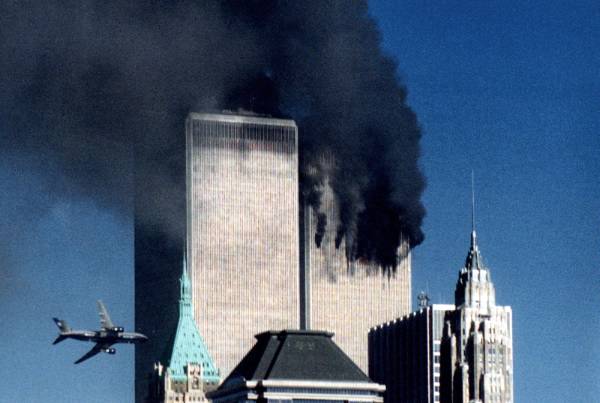
ramblings/connections-- 9/11, genre, arguments
Today in class we discussed the multiple types of genres and which was the most effective. When we were told to think of a topic that is described or illustrated using multiple different genres it made me think of the September 11 tragedy.
Last Friday was September 11, so on that day I saw several things in remembrance of the day and the lives lost. One thing in particular I saw that I thought was incredibly interesting was a show on the Discovery channel. I didn't start watching this until about 12:30 AM, and I only watched it because miraculously my parents were still awake and they were watching it with my brother. Once I sat down, I was immediately drawn in for about two hours.
The show was a compilation of different videos that people had taken on September 11 (2001). The videos started around 8 AM (NY time) when the first plane hit the Trade Center. They showed both crashes, and hundreds of different views from all of the people who had been taping it that day. There were people who submitted videos from New Jersey, and those were pretty interesting because they were watching from across the river and could still see everything perfectly clear.
The videos continued to document the happenings of the rest of the day. There were some taken by people inside of one of the Trade Centers as people were herding out of the stairwells and from the subway systems underneath the Trade Center. Other videos were taken by people in buildings a few blocks away from the Trade Centers. These people could see everything, including the people on the top floors of the towers jumping out their windows. The next view was of the towers actually crashing down. The people who were in the streets walking away from the towers started sprinting, but no one could see a thing due to the enormous black clouds of smoke, dust, and debris that were engulfing them. The videographers themselves started screaming things like "shut the window!" and "duck!" and "stand back!" during this portion of the show. In one of the videos the windows that the camera person was standing behind were completely smashed in once the tower fell and the dust cloud erupted.
Throughout this whole show, none of my family members said a word. We were all so into what was happening on TV. Watching the show brought back the memories of that day. I remember being in fourth grade, Mr. Buhalog's class. Some parents started pulling kids out of school, and the teachers told us that something horrible had happened but they couldn't tell us what it was. I walked home from school with my neighbor, and her mom told us what had happened. I didn't really realize how big it was until I turned on the news and saw the videos of people jumping out of the windows from the top of the buildings.
My point in bringing all of this up again was that I thought the History channel did a fantastic job of getting people to think about September 11, and remember the day. Up until that point, I knew that it was September 11, but I hadn't really thought about everything that happened that day and how immensely things were changed in America after it. The show had the definite aspect of pathos, because it "tugged on the heartstrings" of the viewers and really got through to you.
Last Friday was September 11, so on that day I saw several things in remembrance of the day and the lives lost. One thing in particular I saw that I thought was incredibly interesting was a show on the Discovery channel. I didn't start watching this until about 12:30 AM, and I only watched it because miraculously my parents were still awake and they were watching it with my brother. Once I sat down, I was immediately drawn in for about two hours.
The show was a compilation of different videos that people had taken on September 11 (2001). The videos started around 8 AM (NY time) when the first plane hit the Trade Center. They showed both crashes, and hundreds of different views from all of the people who had been taping it that day. There were people who submitted videos from New Jersey, and those were pretty interesting because they were watching from across the river and could still see everything perfectly clear.
The videos continued to document the happenings of the rest of the day. There were some taken by people inside of one of the Trade Centers as people were herding out of the stairwells and from the subway systems underneath the Trade Center. Other videos were taken by people in buildings a few blocks away from the Trade Centers. These people could see everything, including the people on the top floors of the towers jumping out their windows. The next view was of the towers actually crashing down. The people who were in the streets walking away from the towers started sprinting, but no one could see a thing due to the enormous black clouds of smoke, dust, and debris that were engulfing them. The videographers themselves started screaming things like "shut the window!" and "duck!" and "stand back!" during this portion of the show. In one of the videos the windows that the camera person was standing behind were completely smashed in once the tower fell and the dust cloud erupted.
Throughout this whole show, none of my family members said a word. We were all so into what was happening on TV. Watching the show brought back the memories of that day. I remember being in fourth grade, Mr. Buhalog's class. Some parents started pulling kids out of school, and the teachers told us that something horrible had happened but they couldn't tell us what it was. I walked home from school with my neighbor, and her mom told us what had happened. I didn't really realize how big it was until I turned on the news and saw the videos of people jumping out of the windows from the top of the buildings.
My point in bringing all of this up again was that I thought the History channel did a fantastic job of getting people to think about September 11, and remember the day. Up until that point, I knew that it was September 11, but I hadn't really thought about everything that happened that day and how immensely things were changed in America after it. The show had the definite aspect of pathos, because it "tugged on the heartstrings" of the viewers and really got through to you.
Wednesday, September 9, 2009
A connection to the critical analysis paper...
I sat at my kitchen table on Monday night thinking for what seemed like an endless amount of time trying to come up with something to write about in my critical analysis paper. I then remembered a story I had heard about in the news recently. The story was about a girl named Jaycee Lee Dugard.
Jaycee Lee Dugard had been kidnapped when she was 11 years old in California. Her dad saw it happen, and apparently rode his bike after the car trying to catch her. My initial thought when I heard about that was why on earth would he try to ride his bike after her? He should have drove after her if anything, and if he didn't have a car available he should have gone inside and immediately called 911. He could have told the police what direction the car was headed and what it looked like, then they would have had a better chance of catching the car.
Clearly, chasing the car on his bike was highly ineffective for Dugard's father. She was kidnapped and it took them eighteen years to find her. During those eighteen years she lived with a couple named the Garridos, just a few hours from where she was kidnapped at. She was undoubtedly raped by Phillip Garrido, and she had the first of her two children when she was just 14 years old. She had another child, also fathered by Garrido, when she was 19.
When I was researching the story online, there were quotes on the FBI website from the neighbors of the Garridos. The neighbors said that they had no idea that there was anyone living in the Garridos' home besides Phillip and his wife Nancy. How could there be three young girls living next to you or across the street from you for eighteen years and no one ever saw them? Clearly someone was trying to protect the Garridos, because another quote from a different neighbor said that Jaycee Lee had answered the front door at the Garridos' house, and when asked she said that she was their daughter Allissa.
Not to mention, the Garridos had two large tents and a shed all fenced in the backyard where Dugard and her two daughters were living. Wouldn't you think that if you saw that your neighbors had all of that in their backyard, you would get a little suspicious? Apparently the police had come to the Garridos' house a few times, but never thought to look inside the tents or shed in the backyard. Phillip Garrido was on parole for previously kidnapping and raping a young girl, and the police didn't think to check the backyard???
Don't get me wrong, it's good that Dugard and her two daughters are now safely away from the Garridos' clutches and both Garridos are in prison with bail set at a million dollars. However, something about this story just doesn't seem right to me. There were so many things that the police should have noted as suspicious, that would have been clues that the Garridos were harboring three young girls in the backyard. How or why the police didn't catch that is absurd to me.
Jaycee Lee Dugard had been kidnapped when she was 11 years old in California. Her dad saw it happen, and apparently rode his bike after the car trying to catch her. My initial thought when I heard about that was why on earth would he try to ride his bike after her? He should have drove after her if anything, and if he didn't have a car available he should have gone inside and immediately called 911. He could have told the police what direction the car was headed and what it looked like, then they would have had a better chance of catching the car.
Clearly, chasing the car on his bike was highly ineffective for Dugard's father. She was kidnapped and it took them eighteen years to find her. During those eighteen years she lived with a couple named the Garridos, just a few hours from where she was kidnapped at. She was undoubtedly raped by Phillip Garrido, and she had the first of her two children when she was just 14 years old. She had another child, also fathered by Garrido, when she was 19.
When I was researching the story online, there were quotes on the FBI website from the neighbors of the Garridos. The neighbors said that they had no idea that there was anyone living in the Garridos' home besides Phillip and his wife Nancy. How could there be three young girls living next to you or across the street from you for eighteen years and no one ever saw them? Clearly someone was trying to protect the Garridos, because another quote from a different neighbor said that Jaycee Lee had answered the front door at the Garridos' house, and when asked she said that she was their daughter Allissa.
Not to mention, the Garridos had two large tents and a shed all fenced in the backyard where Dugard and her two daughters were living. Wouldn't you think that if you saw that your neighbors had all of that in their backyard, you would get a little suspicious? Apparently the police had come to the Garridos' house a few times, but never thought to look inside the tents or shed in the backyard. Phillip Garrido was on parole for previously kidnapping and raping a young girl, and the police didn't think to check the backyard???
Don't get me wrong, it's good that Dugard and her two daughters are now safely away from the Garridos' clutches and both Garridos are in prison with bail set at a million dollars. However, something about this story just doesn't seem right to me. There were so many things that the police should have noted as suspicious, that would have been clues that the Garridos were harboring three young girls in the backyard. How or why the police didn't catch that is absurd to me.
Thursday, September 3, 2009
Writing Style
I don't know that I have a very specific writing style yet. It is something that I'm still trying to figure out how to make better and make more of my own.
I know that when I'm writing something for a class that I don't like, my writing definitely lacks. I write much better when I am interested in the topic I'm writing about. I've found that I can actually write pretty well when I like what I'm writing about; the thoughts just keep coming and I can get the paper or assignment done very quickly. On the other hand, if I have to write about something that I really could care less about, all I'm thinking about is getting it over with.
Some things I struggle with when writing are introductions and conclusions. Some people always come up with creative, funny intros that make you actually want to read their papers. I am not that person. My intros are usually boring and cliche, because I never know what to write. I feel that I'm even worse at writing conclusions. They tend to be about a sentence long, and then I ramble on about something else completely irrelevant and stupid because I don't want a conclusion that is only a sentence long. If I could just write the middle paragraphs and skip the intro and conclusion, my writing would probably be a lot better.
I write best when I have music or t.v. or something else going on in the background. If it's dead silent and I'm trying to write, all I'll think about is the silence and the fact that I'm bored and don't really feel like writing at the moment. Also, in the essay we read last night the author said that you should find where you like to write and what you like to write on or with. I definitely choose my computer. That room is more secluded from the rest of my family, and I hate handwriting papers because it gets messy and my hand starts to hurt after a while.
Other than that, I don't really know how to describe my writing style. I don't really do anything too different or exciting. I like to include humor and sarcasm in my writing, but that isn't always possible depending on what I'm writing about. Like right now for instance.
I know that when I'm writing something for a class that I don't like, my writing definitely lacks. I write much better when I am interested in the topic I'm writing about. I've found that I can actually write pretty well when I like what I'm writing about; the thoughts just keep coming and I can get the paper or assignment done very quickly. On the other hand, if I have to write about something that I really could care less about, all I'm thinking about is getting it over with.
Some things I struggle with when writing are introductions and conclusions. Some people always come up with creative, funny intros that make you actually want to read their papers. I am not that person. My intros are usually boring and cliche, because I never know what to write. I feel that I'm even worse at writing conclusions. They tend to be about a sentence long, and then I ramble on about something else completely irrelevant and stupid because I don't want a conclusion that is only a sentence long. If I could just write the middle paragraphs and skip the intro and conclusion, my writing would probably be a lot better.
I write best when I have music or t.v. or something else going on in the background. If it's dead silent and I'm trying to write, all I'll think about is the silence and the fact that I'm bored and don't really feel like writing at the moment. Also, in the essay we read last night the author said that you should find where you like to write and what you like to write on or with. I definitely choose my computer. That room is more secluded from the rest of my family, and I hate handwriting papers because it gets messy and my hand starts to hurt after a while.
Other than that, I don't really know how to describe my writing style. I don't really do anything too different or exciting. I like to include humor and sarcasm in my writing, but that isn't always possible depending on what I'm writing about. Like right now for instance.
Friday, August 28, 2009
Autobiography of a Face
After reading Autobiography of a Face, I have a new perspective on what it would be like to have a life-threatening and life-altering illness.
Basically, the book is a detailed description of Lucy Grealy's life as she was growing up. When she was a preteen she was diagnosed with cancer. The cancer was in her jaw, and she had to have part of her jaw removed in an attempt to get rid of the cancer. Obviously the jaw is a pretty distinctive part of the face, and from then on she never looked normal.
I found it very sad that Grealy had to go through middle school and high school always feeling like an outsider. I remember one time in particular when I felt like an outsider, and that was my first day of middle school. We were sitting in the lunchroom before school started, and I thought it was weird that everyone was sitting in the lunchroom instead of outside on the playground like we had done in elementary school. I felt like I didn't belong in the middle school with these older, seemingly cooler people. However, I soon learned that while these people may have been older, they were nothing too exciting. When I think about it I feel stupid because compared to Lucy Grealy's situation, mine was a piece of cake.
I can't imagine feeling uncomfortable and insecure every minute of every day. Grealy described how sometimes she didn't even feel like she belonged in her own home. The only time she felt like she did belong was when she was at the hospital. I think this proves how judgemental people are. Most of the people who judged Grealy and made her feel minuscule were mere strangers who gave her an awkward glance, or stared at her from afar. It isn't fair that someone who has gone through something so difficult such as cancer should be so openly judged by persons who were so unknowing.
As far as the actual writing went in the book, I was pleasantly surprised at how quickly and painlessly I was able to finish Autobiography of a Face. I have always been a fiction reader, and wasn't exactly looking forward to reading a non-fiction book. Nonetheless, Grealy did a fantastic job (in my opinion) at making her life story interesting.
Basically, the book is a detailed description of Lucy Grealy's life as she was growing up. When she was a preteen she was diagnosed with cancer. The cancer was in her jaw, and she had to have part of her jaw removed in an attempt to get rid of the cancer. Obviously the jaw is a pretty distinctive part of the face, and from then on she never looked normal.
I found it very sad that Grealy had to go through middle school and high school always feeling like an outsider. I remember one time in particular when I felt like an outsider, and that was my first day of middle school. We were sitting in the lunchroom before school started, and I thought it was weird that everyone was sitting in the lunchroom instead of outside on the playground like we had done in elementary school. I felt like I didn't belong in the middle school with these older, seemingly cooler people. However, I soon learned that while these people may have been older, they were nothing too exciting. When I think about it I feel stupid because compared to Lucy Grealy's situation, mine was a piece of cake.
I can't imagine feeling uncomfortable and insecure every minute of every day. Grealy described how sometimes she didn't even feel like she belonged in her own home. The only time she felt like she did belong was when she was at the hospital. I think this proves how judgemental people are. Most of the people who judged Grealy and made her feel minuscule were mere strangers who gave her an awkward glance, or stared at her from afar. It isn't fair that someone who has gone through something so difficult such as cancer should be so openly judged by persons who were so unknowing.
As far as the actual writing went in the book, I was pleasantly surprised at how quickly and painlessly I was able to finish Autobiography of a Face. I have always been a fiction reader, and wasn't exactly looking forward to reading a non-fiction book. Nonetheless, Grealy did a fantastic job (in my opinion) at making her life story interesting.
Friday, August 14, 2009
Prevailing Opinion of a Sexual Character Discussed
When I glanced at the title of this last article, I immediately thought feminism. As it turns out, that was exactly what the article talked about.
Mary Wollstonecraft, despite the fact that she wrote this many years ago, touched on some points that are still viable in today's society. The main point of her article was how women are treated as the lesser important sex almost all the time. She said, "...should they (women) be beautiful, everything else is needless...". I found this point particularly interesting because that fact is absolutely true, especially in today's society.
Wollstonecraft probably didn't realize it when she wrote this, but that remark was almost like a foreshadowing of a very eminent issue with the world. Beautiful women are almost always adored no matter what their personality is like. A woman can be dumb as rocks, but because some men are so incredibly shallow, if she is pretty, chances are good that she'll end up married and with children.
On the other end of the spectrum, there could be an amazingly kind, intelligent woman who might not look like a Barbie, and she might spend her entire life alone because no man was willing to look past the exterior and get to know what she was really like.
Another topic I found controversial was Wollstonecraft's remark regarding how men have to "teach" their wives how to behave and act, and that "teaching" is made easier if the woman had attended school as a child. It is simply pathetic, and on many occasions a woman will start acting differently once she gets married; she'll act in the way that she knows her husband wants her to act.
"It may be impossible to convince them that the illegitimate power which they obtain, by degrading themselves, is a curse...", Wollstonecraft also said this about how women will often bring themselves down in order to seem more attractive to the male species. Why anyone would do this is beyond me; however, I do see where that happens with prostitution, etc.
The last thing I saw as one of Wollstonecraft's main points of her writing was her mentioning of a woman's need to please other. She said that women are raised to please others; therefore, when a wife feels she is no longer pleasing to her husband, she will go elsewhere in order to feel as though she is worthwhile. I think this is definitely something that occurs a lot today, and it is probably the reason that the divorce rate is skyrocketing. There may not be any easy way to change this pattern, it has been occurring as far back as any source of literature can go, and it still hasn't changed today.
Mary Wollstonecraft, despite the fact that she wrote this many years ago, touched on some points that are still viable in today's society. The main point of her article was how women are treated as the lesser important sex almost all the time. She said, "...should they (women) be beautiful, everything else is needless...". I found this point particularly interesting because that fact is absolutely true, especially in today's society.
Wollstonecraft probably didn't realize it when she wrote this, but that remark was almost like a foreshadowing of a very eminent issue with the world. Beautiful women are almost always adored no matter what their personality is like. A woman can be dumb as rocks, but because some men are so incredibly shallow, if she is pretty, chances are good that she'll end up married and with children.
On the other end of the spectrum, there could be an amazingly kind, intelligent woman who might not look like a Barbie, and she might spend her entire life alone because no man was willing to look past the exterior and get to know what she was really like.
Another topic I found controversial was Wollstonecraft's remark regarding how men have to "teach" their wives how to behave and act, and that "teaching" is made easier if the woman had attended school as a child. It is simply pathetic, and on many occasions a woman will start acting differently once she gets married; she'll act in the way that she knows her husband wants her to act.
"It may be impossible to convince them that the illegitimate power which they obtain, by degrading themselves, is a curse...", Wollstonecraft also said this about how women will often bring themselves down in order to seem more attractive to the male species. Why anyone would do this is beyond me; however, I do see where that happens with prostitution, etc.
The last thing I saw as one of Wollstonecraft's main points of her writing was her mentioning of a woman's need to please other. She said that women are raised to please others; therefore, when a wife feels she is no longer pleasing to her husband, she will go elsewhere in order to feel as though she is worthwhile. I think this is definitely something that occurs a lot today, and it is probably the reason that the divorce rate is skyrocketing. There may not be any easy way to change this pattern, it has been occurring as far back as any source of literature can go, and it still hasn't changed today.
Thursday, July 30, 2009
Is Google Making Us Stupid?
The article "Is Google Making Us Stupid?" brings up some very substantial points regarding the amount of time people spend on the computer or the Internet today. With this homework assignment for example, we as students are more likely to actually do the assignment because of the fact that it is on the Internet.
There is so much to do on the Internet, it isn't a surprise that so many people are becoming engulfed. It is very rare to walk into a home in America and not see a computer or a laptop somewhere; and more and more people are buying laptops so that they have constant connection.
When you think about it, between facebook, myspace, twitter, skype, google, yahoo, AOL, msn, and all of the other sites on the Internet, a person could stay busy for months on end. The use of the Internet is causing the use of many other things to dwindle. Newspapers and magazines aren't necessary, you can read them online. Books aren't necessary, you can go online and get the main points of the book without ever reading it. You get the point, the Internet is taking over the world.
I know as a student, I rarely use books or magazines when I am researching something for a school assignment. It is so much easier to log on to google and type in what I'm looking for and be given millions of results within seconds rather than spending time searching through a book.
It seems like the Internet could be helpful, but this is where Nicholas Carr's ideas come into play. Carr says that he feels like someone or something has been "tinkering with his brain" because he isn't able to read lengthy books or pieces of literature, and often finds himself becoming bored very easily.
It would be one thing if people were spending their time on the Internet reading entire books or magazines, but that is most definitely not the case. The Internet condenses and sums up the information into as little text as possible, so as to furthermore simplify our lives. Because we are all so used to skimming things on the Internet and getting the short versions, it makes reading a book or a newspaper seem like a waste of time. Why spend an hour reading a newspaper when I can find out the exact same thing in 10 minutes online?
This may be why Carr thinks that Google is making us stupid. I wouldn't say that google itself if making us stupid, but rather the Internet in general. Because we all read the condensed shortened versions online, our minds retrain themselves to think in quick bursts. Rather than actually reading and contemplating, our minds simply skim over things and then interpret them as quickly as possible. Therefore, I think that Carr isn't too far off in his belief that Google is making us stupid.
Despite the fact that Carr's thinking has a lot of truth to it, I find one thing about his article to be incredibly ironic-- his article was posted on an Internet news site! Wouldn't you think that someone who seems to think the Internet is making people stupid would support traditional news sources, rather than supporting the very thing that he thinks is the cause of our stupidity?
There is so much to do on the Internet, it isn't a surprise that so many people are becoming engulfed. It is very rare to walk into a home in America and not see a computer or a laptop somewhere; and more and more people are buying laptops so that they have constant connection.
When you think about it, between facebook, myspace, twitter, skype, google, yahoo, AOL, msn, and all of the other sites on the Internet, a person could stay busy for months on end. The use of the Internet is causing the use of many other things to dwindle. Newspapers and magazines aren't necessary, you can read them online. Books aren't necessary, you can go online and get the main points of the book without ever reading it. You get the point, the Internet is taking over the world.
I know as a student, I rarely use books or magazines when I am researching something for a school assignment. It is so much easier to log on to google and type in what I'm looking for and be given millions of results within seconds rather than spending time searching through a book.
It seems like the Internet could be helpful, but this is where Nicholas Carr's ideas come into play. Carr says that he feels like someone or something has been "tinkering with his brain" because he isn't able to read lengthy books or pieces of literature, and often finds himself becoming bored very easily.
It would be one thing if people were spending their time on the Internet reading entire books or magazines, but that is most definitely not the case. The Internet condenses and sums up the information into as little text as possible, so as to furthermore simplify our lives. Because we are all so used to skimming things on the Internet and getting the short versions, it makes reading a book or a newspaper seem like a waste of time. Why spend an hour reading a newspaper when I can find out the exact same thing in 10 minutes online?
This may be why Carr thinks that Google is making us stupid. I wouldn't say that google itself if making us stupid, but rather the Internet in general. Because we all read the condensed shortened versions online, our minds retrain themselves to think in quick bursts. Rather than actually reading and contemplating, our minds simply skim over things and then interpret them as quickly as possible. Therefore, I think that Carr isn't too far off in his belief that Google is making us stupid.
Despite the fact that Carr's thinking has a lot of truth to it, I find one thing about his article to be incredibly ironic-- his article was posted on an Internet news site! Wouldn't you think that someone who seems to think the Internet is making people stupid would support traditional news sources, rather than supporting the very thing that he thinks is the cause of our stupidity?
Tuesday, July 7, 2009
Skunk Dreams
The first thought that crossed my mind as I was reading this essay was that it was very confusing. Louise Erdrich jumps around so much with her topics that it I found it very difficult to follow. One minute she is talking about sleeping in the middle of a football field at age fourteen, the next minute she is grown up and talking about how she slept in sketchy motels while she was working in North Dakota.
One of Erdrich's first topics revolves around her night in the football field. She is wondering whether or not skunks or other animals have dreams similar to humans. Can a skunk have a dream about becoming a stock broker? I think not. A skunk would have no idea what a stock broker is; you can't have a dream about something that has never even been introduced to your brain.
The author goes from talking about the dreams of animals to her thoughts on life after death. I think that the connection she was attempting to make between those two points is that she thinks that life after death might possibly feel like she is dreaming. However, I highly doubt that being in either Heaven or Hell feels like a dream.
One of the most puzzling dreams the author describes involves a lot of fenced in area. The fences have barbed wire and sound to be quite desolate. Inside the fences are trees. This might explain why later on in the essay, the Erdrich talks about how she found solace in trees when she was feeling so low and longing for the northeastern horizon. As Erdrich walks farther through the forest and the trees, she comes upon a place that is almost exactly as she had dreamt of it years earlier. She continues to visit this place, with the fenced in animals. However, as she visits the place more often, she realizes that it no longer satisfies her.
Erdrich feels like the animals inside of the fence. She can look at them from afar, but will always be on the outside looking in. Her insatiable desire to watch the animals overcomes her, and one day she goes through the fence into the game field. She walks for hours, and finds no animals. Finally, on her way back home, she stumbles (literally) upon a wild boar. The boar looks at her, and then seems to float away without disturbing anything around it.
To end the essay, Erdrich talks about how if she could be any animal, she would choose to be a skunk. She things that skunks have the utmost freedom; they aren't afraid of being captured, and live a fearless life. I think that there are several things in the author's life that are holding her back and feel as though she is captured and never able to get out. This is why she wishes she were a skunk, so that she could live her life freely and without hesitation.
One of Erdrich's first topics revolves around her night in the football field. She is wondering whether or not skunks or other animals have dreams similar to humans. Can a skunk have a dream about becoming a stock broker? I think not. A skunk would have no idea what a stock broker is; you can't have a dream about something that has never even been introduced to your brain.
The author goes from talking about the dreams of animals to her thoughts on life after death. I think that the connection she was attempting to make between those two points is that she thinks that life after death might possibly feel like she is dreaming. However, I highly doubt that being in either Heaven or Hell feels like a dream.
One of the most puzzling dreams the author describes involves a lot of fenced in area. The fences have barbed wire and sound to be quite desolate. Inside the fences are trees. This might explain why later on in the essay, the Erdrich talks about how she found solace in trees when she was feeling so low and longing for the northeastern horizon. As Erdrich walks farther through the forest and the trees, she comes upon a place that is almost exactly as she had dreamt of it years earlier. She continues to visit this place, with the fenced in animals. However, as she visits the place more often, she realizes that it no longer satisfies her.
Erdrich feels like the animals inside of the fence. She can look at them from afar, but will always be on the outside looking in. Her insatiable desire to watch the animals overcomes her, and one day she goes through the fence into the game field. She walks for hours, and finds no animals. Finally, on her way back home, she stumbles (literally) upon a wild boar. The boar looks at her, and then seems to float away without disturbing anything around it.
To end the essay, Erdrich talks about how if she could be any animal, she would choose to be a skunk. She things that skunks have the utmost freedom; they aren't afraid of being captured, and live a fearless life. I think that there are several things in the author's life that are holding her back and feel as though she is captured and never able to get out. This is why she wishes she were a skunk, so that she could live her life freely and without hesitation.
Wednesday, July 1, 2009
Talk of the Town
"The cell phones in the pockets of the dead students were still ringing when we were told to ask why," --Adam Gopnik. As the first line of an essay in the New Yorker, it didn't take me long to realize that what I was about to read was going to be a highly controversial topic-- one that is at the top of the priority list these days in America.
In this first line, Gopnik is referring to the shootings at Virginia Tech. He goes on to mention how the shooter had a mental illness, yet was able to buy very powerful guns anyway. Gun control has been a problem in the U.S. for many years now, but it seems to me that it keeps getting worse. I agree with Gopnik in his standpoint that it is insane that someone with a mental illness could easily get ahold of guns whose primary purpose is to kill people.
Many people with mental illnesses can't even get driver's licenses in America, how is it that they can buy guns? There had to have been a severe lack of questioning or inquiry performed by the company selling the guns in order for this to happen. Tightening guns laws doesn't always work, there will always be someone who can figure out a way to get around the law. However, it does make sense to at least try to make it more difficult for civilians to purchase such lethal weapons.
In several different countries, such as Paris, Canada, and Scotland, gun control laws have been increased after deadly shootings. In all of these places, the number of shootings or deaths due to shootings has greatly decreased. This fact alone proves that it would be well worth it for the U.S. to tighten gun control laws in order to protect innocent citizens.
Judging by the comments made by Susan Sontag about the government and the way our country is run, I think it is safe to say that Susan Sontag is very anti-Bush. Sontag mentions that the terrorist attacks on September 11 were not "cowardly attacks on civilization", but rather an attack on the world's "self-proclaimed superpower".
Are we really the superpower? Currently we are at war and are in a major economic recession. I don't know who proclaimed the United States as a superpower, but I think that our days of being a superpower are long gone. Many countries that used to be weak and lacking resources are catching up quickly, and several have probably bypassed us in this area.
The problem is that most people don't realize this. They don't realize it because (as Sontag mentions), the government only tells the people what they want to hear. When you watch the national news at night, you don't hear about all the other countries that are becoming rich or are gaining new intelligence. You hear about the pirates that are ruining Somalia, or anything else that is going wrong with the world.
It may be depressing to hear about what is really going on in the world, and where we really stand. However, I think that it would be beneficial for people to actually know these things, instead of being fed bologna by the politicians. Maybe if someone besides the government knew what was going on in the world, there would be more of an effort to help our country out, so that we actually could be the superpower again.
In this first line, Gopnik is referring to the shootings at Virginia Tech. He goes on to mention how the shooter had a mental illness, yet was able to buy very powerful guns anyway. Gun control has been a problem in the U.S. for many years now, but it seems to me that it keeps getting worse. I agree with Gopnik in his standpoint that it is insane that someone with a mental illness could easily get ahold of guns whose primary purpose is to kill people.
Many people with mental illnesses can't even get driver's licenses in America, how is it that they can buy guns? There had to have been a severe lack of questioning or inquiry performed by the company selling the guns in order for this to happen. Tightening guns laws doesn't always work, there will always be someone who can figure out a way to get around the law. However, it does make sense to at least try to make it more difficult for civilians to purchase such lethal weapons.
In several different countries, such as Paris, Canada, and Scotland, gun control laws have been increased after deadly shootings. In all of these places, the number of shootings or deaths due to shootings has greatly decreased. This fact alone proves that it would be well worth it for the U.S. to tighten gun control laws in order to protect innocent citizens.
Judging by the comments made by Susan Sontag about the government and the way our country is run, I think it is safe to say that Susan Sontag is very anti-Bush. Sontag mentions that the terrorist attacks on September 11 were not "cowardly attacks on civilization", but rather an attack on the world's "self-proclaimed superpower".
Are we really the superpower? Currently we are at war and are in a major economic recession. I don't know who proclaimed the United States as a superpower, but I think that our days of being a superpower are long gone. Many countries that used to be weak and lacking resources are catching up quickly, and several have probably bypassed us in this area.
The problem is that most people don't realize this. They don't realize it because (as Sontag mentions), the government only tells the people what they want to hear. When you watch the national news at night, you don't hear about all the other countries that are becoming rich or are gaining new intelligence. You hear about the pirates that are ruining Somalia, or anything else that is going wrong with the world.
It may be depressing to hear about what is really going on in the world, and where we really stand. However, I think that it would be beneficial for people to actually know these things, instead of being fed bologna by the politicians. Maybe if someone besides the government knew what was going on in the world, there would be more of an effort to help our country out, so that we actually could be the superpower again.
Sunday, June 21, 2009
ME
Just in from Idaho, USA. I have traveled over 1800 miles in one minivan with three young children under the age of 8. Not to mention, Trudy. Trudy is a "hitchhiker".
I was thrust into a relationship with Trudy very abruptly when she made the unfortunate decision to fly in front of the van. That was about a week ago, and Trudy is still on the front of the van, hanging on by her beak. Normal people would have saved others from having to see Trudy in all of her bloody glory; however, I am not a normal person. We thought Trudy was a nice addition to the van, a symbol of our accomplishments. Never a dull moment with Trudy around, she has been the center of multiple conversations.
Such conversations were not always pleasant. I watched as passersby looked at Trudy; young children neared tears at the sight of her small body splayed across the headlight. Everyone has a story, and Trudy will forever be a part of mine.
My story began about 17 years ago, back home in Wisconsin. Being the youngest child in a family with three children was not always a walk in the park. Nevertheless, the fact that I am the only daughter provides a definite silver lining in my meager situation. I endured several years of endless torture from my older brothers, entirely unnecessary.
It is only now that I have realized the good fortune which I was born into. I will admit, I am a "daddy's girl". This allows me to reap several benefits, such as a little extra cash here and there, or the use of a vehicle much nicer than my own.
During the days that I am not receiving the benefits of being the only daughter, I spend most of my time in school. While not in school, I enjoy playing tennis, basketball, and track. My junior year was a pretty fantastic one for sports; our tennis team won conference, the basketball team got second in conference and went to the regional championship, and I went to state for shot put during the track season. More about me later, it is time to wrangle the rascals and cheer on the athletes in the Ironman triathlon here in Coeur d'Alene, Idaho.
I was thrust into a relationship with Trudy very abruptly when she made the unfortunate decision to fly in front of the van. That was about a week ago, and Trudy is still on the front of the van, hanging on by her beak. Normal people would have saved others from having to see Trudy in all of her bloody glory; however, I am not a normal person. We thought Trudy was a nice addition to the van, a symbol of our accomplishments. Never a dull moment with Trudy around, she has been the center of multiple conversations.
Such conversations were not always pleasant. I watched as passersby looked at Trudy; young children neared tears at the sight of her small body splayed across the headlight. Everyone has a story, and Trudy will forever be a part of mine.
My story began about 17 years ago, back home in Wisconsin. Being the youngest child in a family with three children was not always a walk in the park. Nevertheless, the fact that I am the only daughter provides a definite silver lining in my meager situation. I endured several years of endless torture from my older brothers, entirely unnecessary.
It is only now that I have realized the good fortune which I was born into. I will admit, I am a "daddy's girl". This allows me to reap several benefits, such as a little extra cash here and there, or the use of a vehicle much nicer than my own.
During the days that I am not receiving the benefits of being the only daughter, I spend most of my time in school. While not in school, I enjoy playing tennis, basketball, and track. My junior year was a pretty fantastic one for sports; our tennis team won conference, the basketball team got second in conference and went to the regional championship, and I went to state for shot put during the track season. More about me later, it is time to wrangle the rascals and cheer on the athletes in the Ironman triathlon here in Coeur d'Alene, Idaho.
Subscribe to:
Comments (Atom)